Human-Centered Tutoring, Supported by AI
How Step Up is using AI to strengthen—not replace—human tutors
More than 12 million elementary and middle school students from low-income families are behind grade level in math or reading. Closing that gap takes more than good intentions; it takes consistent, skilled, one-on-one support. And yet, there is no shortage of people who want to provide exactly that. College students, aspiring teachers, and community members across the country are eager to tutor, motivated to pay it forward and to make a difference for kids, or to gain meaningful experience while exploring a career in education.
The challenge isn't a lack of caring. It's that effective tutoring is harder than it looks. Behind every strong session is a series of real-time instructional decisions: which skill to focus on, how to build understanding, when to step back to a prerequisite, when to push forward. For experienced educators, these decisions become intuitive. For newer tutors, navigating them in the moment is genuinely difficult, and that uncertainty keeps many willing people on the sidelines.
Human Connection Comes First
At Step Up, we start from a simple belief: learning happens through relationships. The trust, consistency, motivation, and accountability that make tutoring work are things only a human can provide. That's why we're not building AI tutors.
Instead, we're using AI to support tutors, reducing the cognitive load of instruction so they can provide effective instruction while building relationships, responding with empathy, and motivating students to keep going. The goal is to help tutors feel more confident and prepared, without ever displacing the relationship at the core of the session.
Funded to Build What's Next
Last year, NewSchools Venture Fund funded Step Up as part of the NextGen AI Math Tutoring Cohort to develop AI tools designed to drive tutor effectiveness. Building on more than 250,000 hours of one-on-one virtual tutoring, we've launched two tools, each designed to act as an instructional co-pilot, supporting tutors before and during sessions.
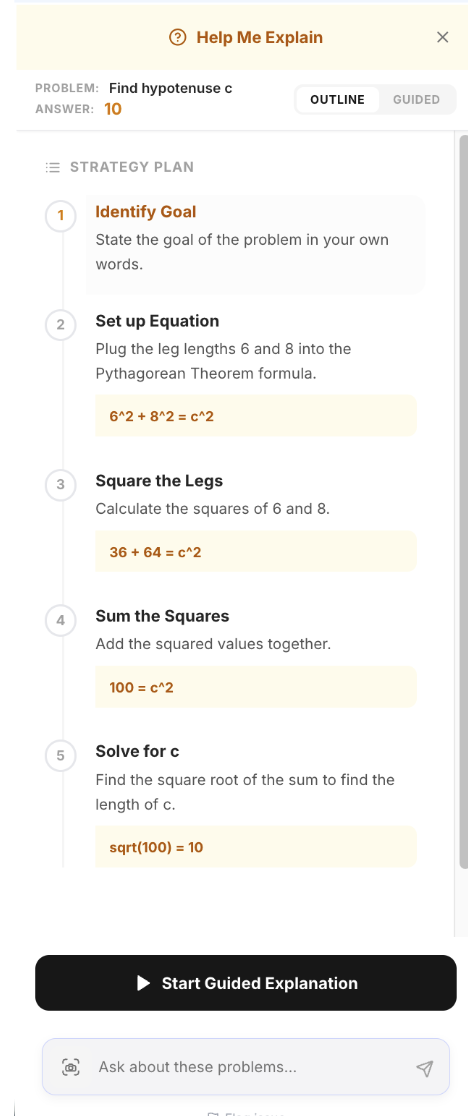
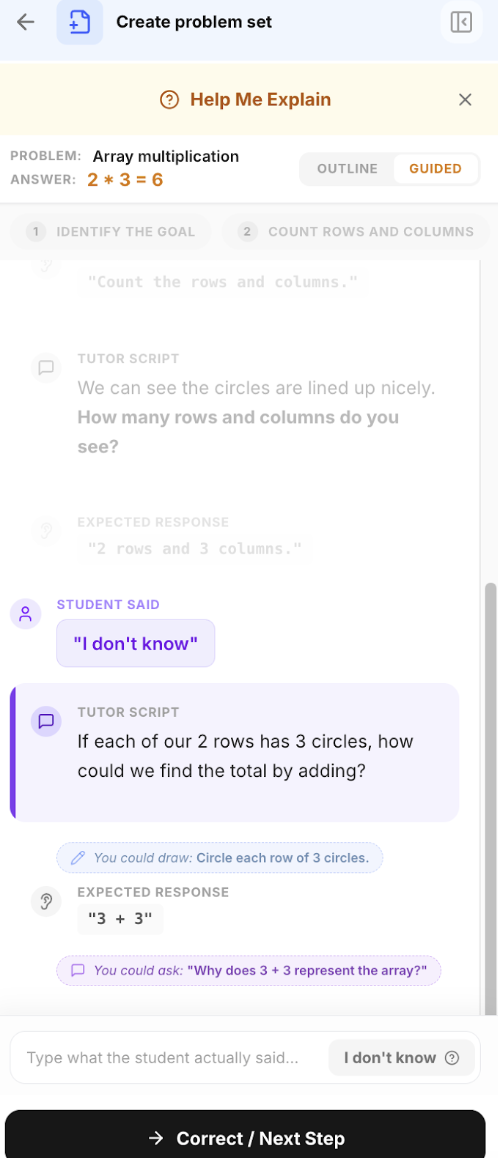
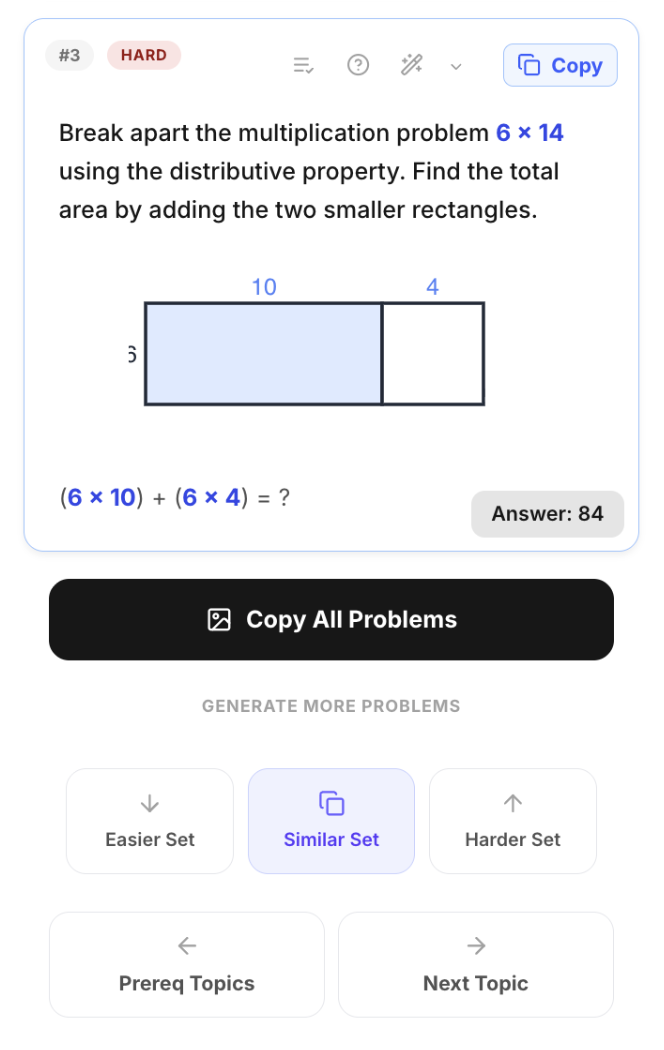
Sidekick provides real-time support during live tutoring sessions. It offers instant talk tracks, high-leverage questions, and skill progression guidance—helping tutors explain math clearly, respond to misconceptions, and keep students thinking rather than just memorizing steps. When a student is stuck, Sidekick helps the tutor quickly step back to a prerequisite skill. When a student is ready to move on, it helps them do that too. Tutors can generate curriculum-aligned practice problems on demand, adjust difficulty in the moment, and even personalize problems around student interests. The tutor stays fully in control throughout; Sidekick is simply there when they need it.
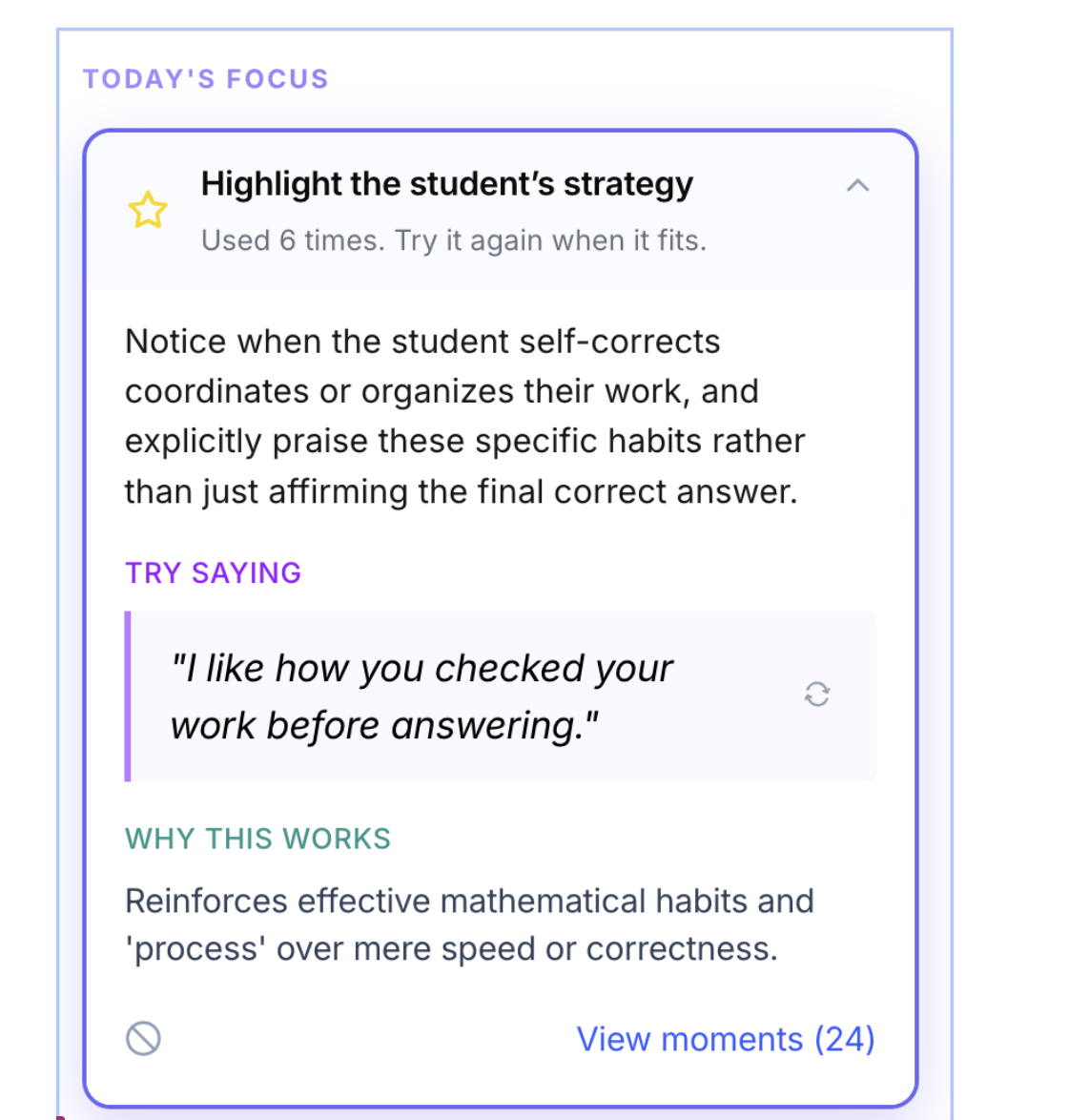
Session Briefing turns each session into a coaching opportunity. After every session, it reviews what happened—how the tutor asked questions, responded when students struggled, and supported student thinking. Then, right before the next session begins, it delivers a focused summary: student progress, priority skills to address, and one clear, research-backed coaching focus the tutor can apply immediately. Rather than generic feedback, tutors get specific, timely guidance that helps them build stronger habits with every session.
We're currently piloting both tools with tutor–student pairs in California, with an independent evaluation underway to track their impact on tutoring quality, tutor confidence, and student engagement. Early signs are encouraging. Tutors using the tools say they ease the burden of real-time instructional decision-making, giving them more space to focus on the student in front of them. One tutor shared:
“As someone who hasn't taken a math course in over 15 years, the Tutor Sidekick has increased my confidence as a tutor by showing me how to scaffold math problems in the moment with my student. The Session Briefing provides me with examples of what to say to provide my student with better feedback and increase her confidence, too.”
Looking ahead, we're excited to see not only how these tools strengthen student learning outcomes, but how we can continue to use AI to solve other instructional challenges — including improving curricular alignment and supporting assessment.
High-impact tutoring is one of the most proven ways to accelerate student learning—but it has historically been hard to scale without sacrificing quality. By pairing people who genuinely want to help with tools that help them do it well, we think we can change that. We don't have to choose between quality and scale, and we're working every day to prove it.